I have to admit that I was worried my trip to Tawi-Tawi would be aborted because of all the negative things I had heard from people and from the news. I mean, just google Tawi-Tawi and you’ll be greeted with stories of kidnappings, the Abu Sayyaf, unfriendly locals, and all sorts of horrid things. Another reason I thought the trip was doomed was that my travel companions started backing out two weeks before our departure.
But here I am—loving Tawi-Tawi for what it is: the simple lifestyle, the charm of the people, and a beauty that at first felt almost fabled, something I thought I had simply imagined, only to discover that it is profoundly true.
There is always a lingering, unfounded fear whenever we set foot anywhere in Tawi-Tawi. Rumors of kidnappers, murderers, and even cannibal sultans buzz at the back of my mind. Just yesterday, we were at the Chinese Pier looking for a boat to rent. In just five minutes, we were surrounded by men speaking Tausug, Sama, and bits of Tagalog. They looked burly and serious, advising us not to go to the far islands of Sibutu, Sitangkai, or Panglima Sugala (where the recent kidnapping of two Dutch citizens took place). Their concern was genuine, but they certainly scared me. Still, being the stubborn travelers that we were, we managed to find a boat willing to take us to a nearby beach.
The “nearby” beach turned out to be a Tausug village with a not-so-pleasant view of floating toilets. We asked if we could go to the islands instead—raising the fee, of course. Fortunately, the boatman agreed without hesitation.
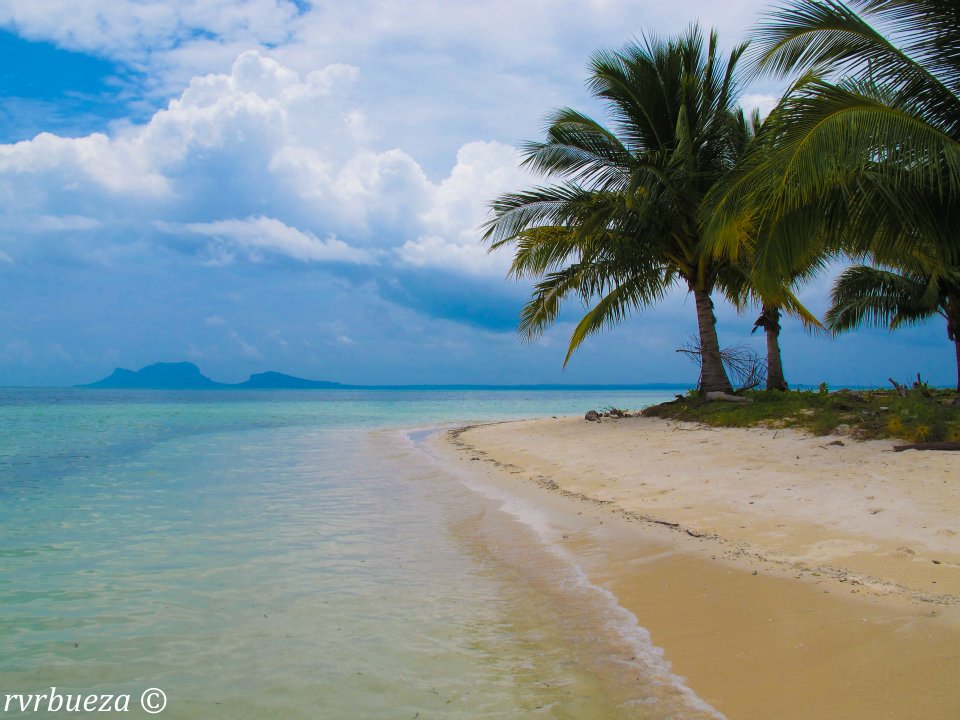
He brought us to Sangay Siapu Island in the municipality of Simunul. And my God, it was the best decision we made. Very small, ringed with fine white sand, Sangay Siapu is inhabited by about 10–20 workers from a dried-fish enterprise. I was wary of the people at first. But the moment you greet them with “salamallaykum,” they automatically smile and reply, “allaykumasalam”—peace be with you. A simple but deeply assuring exchange. And yes, there is peace on that island. The white sand fades gently into green, blue, and then turquoise waters. It was so easy—so natural—to say Salam.
Carl (my travel companion) and I befriended two girls, Mansi and Amisha (their surnames were so long I forgot them). They were daughters of the workers on the island. They taught us how to count in Tausug, and we taught them how to count in English. They joined us in swimming in the cool, beautiful waters of Sangay.
Turquoise. I will always associate that color with Tawi-Tawi. I think it’s the combination of the white sand beneath the shallow water, the sun, and the stillness of the sea that makes you exclaim, “Whoa. Turquoise.”
This morning, we climbed Bud Bongao—a peak somewhat reminiscent of Table Mountain in South Africa. Our guide was Kuya Ben, a friendly tricycle driver we met at the airport yesterday. It’s unfortunate that he doesn’t have a cellphone; I would gladly recommend him to anyone visiting Tawi-Tawi. He was incredibly friendly and helpful, and we were lucky to have met him.
The trek to the Bud was exhausting; we had to stop every few meters. It was steep and slippery. Along the way, our guide and his friend told us stories about the mountain—about a princess who was turned into stone, and about the Nabi, or Prophet, who is said to be buried at the summit. The mountain, especially the kubol that houses the Nabi’s earthly remains, is sacred to them. They say that any wish you pray for—whether the Nabi is male or female, as even they do not know—will be granted.
At the top, people were praying and touching the sacred burial place. I prayed too, knowing the Nabi wouldn’t mind that I am Catholic. I believe religious affiliations don’t count in heaven.
A few more meters upward brought us to the bintana, a sweeping vantage point overlooking Bongao and the nearby islands. It was unfortunate that the sky was cloudy—we didn’t get to see Borneo—but they say it’s only two hours away from Bongao. Standing at the top of the Bud, I felt peace again. The land and the sea both seemed to proclaim Salam. Peace wrapped around us.
And so I exhaled a prayer for Tawi-Tawi: Salam.


 Being Here, Now.
Leave a comment